Monday, May 25, 2015

Memorial Day

Here in the United States of America, we set aside today to honor those who have have given their life in military service to our country. Those who have fought and died defending our principles and freedoms. It is a somber celebration of dead heroes who gave their lives for our sake. Veterans and civilians alike pay tribute to those who have made the ultimate sacrifice for us. Please remember them on this day.

As a veteran, I appreciate our country’s recognition of all of us veterans on November 11th. Today is not that day. I did not die in conflict or war defending our nation. Please join me in celebrating the lives of those who did by remembering and honoring them today. They deserve it.

Monday, May 18, 2015

Lead By Example Part II, Ethics

When I speak of ethics, I’m speaking of a right or wrong above the normal moral and legal definitions. Though ethical includes moral and legal the same as unethical includes immoral and illegal, it’s really a fine tuning of behavior that sees a right or wrong action even if it may be moral and legal. For instance, the company policy and governmental law may allow you to accept gifts from vendors under a certain dollar amount, is it ethical in all situations? As a leader, we need to maintain a conduct that is above reproach because our integrity is at stake.


I don’t cater to the notion that we should worry about how our actions are viewed by others. People tend to apply their own motives to the actions taken by others which can create a misperception of the truth. If we are doing what is legally, morally, and ethically appropriate, we satisfy our own integrity. Others may try to use perception against us but that will happen regardless of our attempts to the contrary. Learn right from wrong, practice what is right, and let the chips fall where they may. You have bigger fish to fry than the pettiness of others toward you.

To help refine the distinction I’m making between legal, moral, and ethical behavior, I want to use a simple domestic example. You and your buddy are throwing the football around in the house and it hits a lamp. The lamp crashes to the floor and shatters. When your wife asked who broke the lamp you say “I didn’t touch it.” Breaking the lamp wasn’t illegal, you didn’t lie (technically) which means it wasn’t immoral so...are you acting ethically?
All too often we are told to do things that can appear to cross an ethical line. My rule is to do as I’m told (as long as it's in writing) unless I’m absolutely sure it’s unethical. My feeling is the boss should be respecting ethical boundaries and if it’s not a clear cut violation and he’s willing to document the order, then I won’t quibble. I try not to be a virtue warrior holding the world to my standards but I also won’t allow someone to use me to violate known and accepted standards.

Is it really an ethical issue?
Something that violates my sensibilities, but may not entirely be an ethical issue, is the mandating of personal expenses. I call them unfunded mandates. I have established it as an ethical issue in my personal book of rules. Let me explain. Specialty clothing, tools, supplies, travel, etc. that are required for the performance of your job, should be paid for or provided by the employer. The law doesn’t allow me to work without pay and it does so for a reason, to prevent exploitation. Ethically, I can’t allow my people to work off-the-clock even if they volunteer to do so. Why should other expenditures be any different?

If I’m your employer or boss and you need a screwdriver to do your job, I need to furnish it. If you rather have a screw gun, that’s your personal taste and not my responsibility. I know business travel is covered by companies but how do you handle small errands. Again, a system should be in place to ensure this somewhat minor expense is covered. Let me take an example that comes from my short stay as Chief of Tactical Weather Operations. My team needed multi-tools, the kind you strap to your belt. When I arrived at the unit they were purchasing them on their own because the powers that be wouldn’t buy them. To me, that was unacceptable, bordering on ridiculous, and I corrected the situation. They received basic standard issue multi-tools, if they wanted fancier ones, they were free to buy them.

I think of it this way-- the company is making money, directly or indirectly, from the work I perform. The compensation I receive for that work shouldn’t need to be reinvested in the company by me in order to do my job. To me, that’s unethical.

Gifts
One typically small ethical issue that arrives from time to time is that of gifts and/or favors. Except for those given to me by my employer, I tend to say thanks but no thanks when offered a gift or personal favor on the business side of my life. However, it can be a nice perk for your subordinates. You should take the necessary steps to ensure they know the company policy as well as the IRS code. You may even want to hold a brief meeting and let a HR representative cover the topic.

There is one particular episode sticks in my mind. We were having a new gym floor installed at the high school where I worked. It was tongue in groove maple flooring. While doing a job site walk-through with the owner of the company installing the floor, I remarked how beautiful the maple was. To emphasize my point I said it was something I would love to have in my kitchen. I honestly didn’t realize what I may have implied until I heard him say, “how much do you need?” Two thoughts ran through my head. First, he was either offering to sell me some or give me some. Second, how do I back out of this without sounding like I’m accusing him of unethical conduct? To avoid this potentially sticky situation, I replied, quite honestly I might add, that I wasn’t in a position to lay a new floor in my kitchen but if I did it would be maple...crisis averted. I was also very careful about what I said after that.

Is laziness ethical behavior?
Since we’re talking about setting an example in the context of ethics, what about the work ethic? Might as well speak to it here and now. Laziness is one of my biggest pet peeves and the boss who sets a bad work ethic example shouldn’t draw a paycheck. In fact, I would go as far to say the boss should be the hardest worker. The boss doesn’t compete for the title of hardest worker, he merely sets the standard of what hard work is all about.

My definition of work ethic includes more than just putting in long hours or shouldering a large quantity of responsibility. To me it’s the whole spectrum of work; physical and mental, as well as organization and planning. Remember too, no task is beneath you when you understand how truly honorable work is. Cashing and spending your paycheck without having put in your best effort, on the other hand, is dishonorable (or unethical if you're using my book of rules).

I not talking about running full tilt all day, every day. That will just burn you out. I’m talking about fully applying yourself to work while at work. The pace you set must be manageable but it requires you to be engaged at all times. Physically performing tasks is just part of it. Concentration is another important component. The higher up the foodchain you move, the more directions you’ll be pulled. Being able to think through issues, plan the next several steps, and still give your full attention to the task at hand is work, hard work. Establishing systems to keep you on track despite being pulled in many different directions allows you to maintain the appropriate level of concentration without losing track.

Strong work ethic never makes an issue about what sort of job you’re given. You’re allowed to desire the more exciting jobs but cranking out the task you’ve been handed is paramount. The picky, crybabies that clamor for one job or another because they consider them easy or glamorous were never good leaders when promoted. Attack even the boring tasks and crank them out. The boring tasks can give your brain the necessary time to work through other issues without losing any productivity. Remember, you need to do your fair share of all the work, not just your favorite.

"Work" as a team
When you have an “example setting” work ethic it shows up in your team play. You understand how the entire unit is responsible for their production and you fill in as needed. If you’re in a support role for your team you think a step ahead for what’s needed. Example, you’re helping a carpenter build a picket fence. As the carpenter is lining up the picket, you fetch the hammer and nails. As he’s nailing the picket to the fence you’re already fetching the next picket. In other words, you don’t wait to be told the next task, you anticipate and do. If you’re in the other role, say you’re the carpenter, you provide good clear guidance or instruction. You let your helper know what’s coming and what needs to be done next. Always thinking, concentrating, and working to achieve the necessary result. That’s how work gets done with your work ethics intact.

One of the traits of people I’ve known with strong work ethics is their acceptance of ideas to improve the work. If an idea was brought up to improve the workflow they would be all over it. Brainstorming ideas to make it get done quicker or better seemed to be constantly on their minds. Collaborating becomes a way of life and let’s you set an example of cooperation  I also noticed the excessive amount of time and effort the lazy ones would spend to make tasks “easier” or to avoid them all together. Another group that never did well when promoted to a leadership position.


You can normally get an ethics briefing from HR or at least standard literature on the subject. It provides you with the company's ethics policy which you need to know backward and forward. I wanted to emphasize the example setting aspect in this post. When you’re working on keeping your integrity intact, understanding how ethical behavior can affect it is crucial. Keeping your nose clean comes in pretty handing when you have to mete out discipline as well. You don’t want to be a hypocrite.

Don’t set an example of someone who plays fast and loose with the rules because...you don’t want your subordinates playing fast and loose with yours.

Monday, May 11, 2015

Is It Hammer Time?

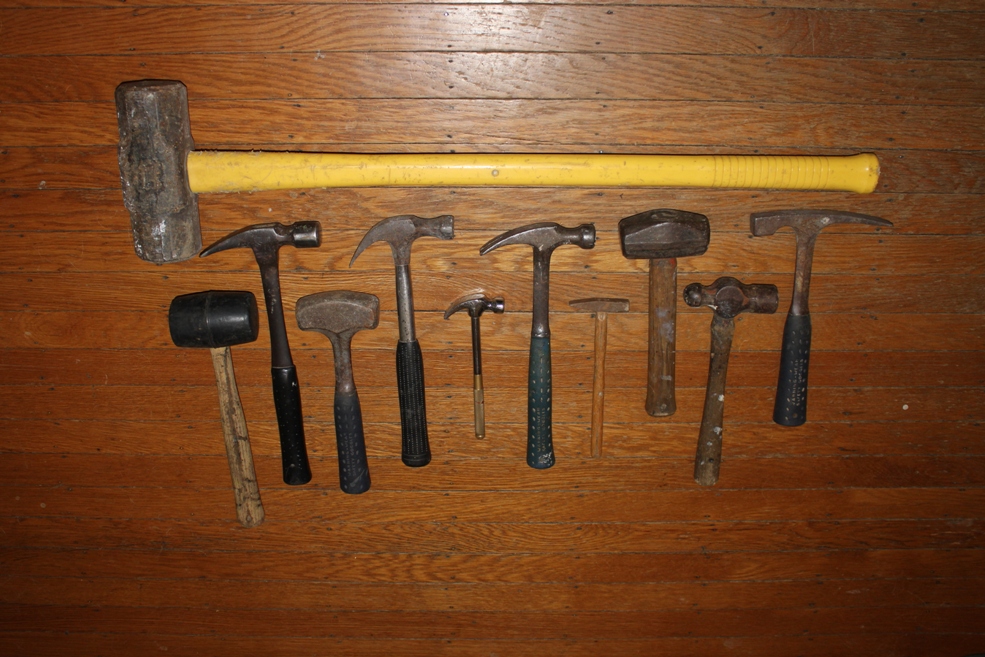
In my military daze (no, I’m not going to bore you with old timey reminiscence) I used an analogy to explain authority to my troops. I used a hammer as the tool in their leadership arsenal to represent authority. When they were promoted to the rank of noncommissioned officer they were issued a hammer. The first hammer they were issued was a tack hammer which was upgraded to a bigger hammer each time they moved up the ranks. By the time an individual reached the rank of E-9, the highest NCO rank, they possessed a 10-lb sledge hammer.


The first bit of authority, the tack hammer, can be used to bust knuckles and inflict a small amount of pain but not cause serious bodily injury. Much the same way they could cause some small but not career ending disciplinary pain to their subordinates. As they grew in rank their ability to negatively affect the careers of their subordinates grew. Bigger hammer, more bodily harm when wielded about, knee caps over knuckles say.


assorted-hammers.jpg


The trick to real leadership wasn’t learning how to wield your “hammer” effectively. Instead, you needed to frame it behind glass and hang it over your desk. It’s there and everybody knows it’s there but that’s as much as you should need to use it. You must collect more effective tools to motivate and guide your team. The idea is that your team should follow you out of respect. Respect you’ve earned through your integrity. Respect you command. Authority demands respect and the hammer represents the institution’s demand of respect for that position or rank. You want to command respect and not demand it.

old-and-well-worn-pin-hammer-framed.--hammer.jpg


In order to command respect you must demonstrate integrity in all things. From there, if you are a leader, you need know how to lead, constructively. Wielding a hammer is destructive, at least to the injured party, and should be reserved for those who refuse to follow despite your best efforts to lead them.


I have found it is the tendency of youth (or immaturity) to reach for the hammer first when compliance is not forthcoming. If a young supervisor is not properly trained and mentored, he finds out the hard way how ineffective and destructive it can be to attempt to gain compliance through the use of authority (the hammer). Even if it is fully supported by his supervisor (it rarely is) and he gains reluctant compliance, it has a negative effect on his entire team.


When you begin to focus more on the responsibilities of your position and maintaining your integrity, you’ll find the respect you earn will have a greater influence over the team than any authority power that comes with the position. You’ll also find that any power and authority you are issued with the position of leadership is actually insufficient to complete the job. This means that you’ll need to rely on other leadership tools. It’s best to develop those skills, or tools, now so you’ll be ready to accomplish the mission regardless of the authority level you possess.


Hammer time?
At the risk of over simplifying the concept but to illustrate it, let’s try a hypothetical example. You’re a first-line supervisor, a team lead with direct reports. One of your team members has found a shortcut way to get his work orders pushed through the system quicker.


Scenario #1. You remind him that he needs to follow the procedures as written without shortcuts. Enough said, back to business. You discover over the course of the week that he is still using his shortcut.


Let’s assess for a minute. He’s a good worker, team player, and cooperative in most instances.


You can grab your tack hammer, drag him into your office(or private meeting room) and crack a knuckle. Translated, you can bring him into your office and serve him a formal performance counseling (not following orders, not following proper procedures), which will be entered into his personnel records, and remind him he is to do as he’s told and follow procedures.


You have that authority, it’s well within your rights (right vs. wrong) to exercise that authority in this way. OR…


Scenario #2. You pull up a chair in his cubicle (or work area) and have him explain his shortcut. The why’s and the how’s of it. You discuss the reasons behind the current procedure and together determine; if he is “taking cuts” in line and negatively affecting others or if he’s developed a usable system to speed up the process. In this particular example, it’s determined that it’s something he shouldn’t be doing. You remind him of the proper procedure and why it’s important as well as his duty to follow it as written. Once back in your office, you annotate your discussion and the steps you took to correct the behavior in a brief memo to yourself (always, always, always document). You discover over the course of the week that he is still using his shortcut.


You arrange a short meeting with your boss. You briefly explain the situation to her. You show her your “performance improvement plan” for this team member, which includes any retraining, and the timeline for completion. It includes the goals of the plan and the team member’s responsibilities for corrective action. With her input and/or blessing, you have a performance counseling with the team member. If he fails to respond to this performance improvement by meeting the goals within the time given, you have what you need to send him to your boss for disciplinary action or dismissal. Your hammer has never left the glass case.
I realize the example seems a bit disconnected in the “crime to punishment” scale but I hope it illustrates the concept.


House cleaning or home wrecking?
What I observed over the years was the how various categories of “leaders” dealt with their “hammer” (snicker all you want but it’s a good analogy). The worst offenders of misuse/abuse were those that rose too rapidly to the rank of E-9. They wouldn’t even stow that 10-lb sledge in their belt but carried it around like they were standing at home plate and the pitcher was rearing back to throw. They showed no patience, no tolerance, and no compassion.


This is what I call an abuse of power and not leadership in any form. I have seen examples of this form of abuse destroy entire units filled with good, conscientious troops. Typically this sort of “leader” is sent into a unit or department behind a weak and worthless “leader.” The unit has become a reckless liability to the organization and needs to be squared away. Morale has hit rock bottom and motivation is at an all time low. Bad attitudes have ruined the effectiveness of even the best workers in the group. In an apparent effort to prove themselves part of the problem (a bit of sarcasm if you didn't pick up on it), the brass decides to clean things up with the sledgehammer approach. They send in their “best” house cleaner, a head-cracking sadist, who proceeds to beat up everyone indiscriminately. Careers of some good people are needlessly ruined. Remember, the powers that be allowed the situation to become what it is by neglecting to step in much earlier in the process. Now, in an effort to cut their losses, they willfully throw others under the bus to save their own skin. No integrity, no compassion.


The interesting part, I believe, is the amount of resources thrown at this kind of issue. Resources that in the hands of a real leader would have made the unit sparkle with minimal destruction. In the case of these head-crackers, the “upper management” requires little or no accountability for their actions or expenditures. An example of some of the resources I mean would be the cost/expense of personnel turnover, new equipment, and additional supplies. The sledgehammer wielding Officer or NCO, gets a free pass on spending in these categories. Equipment and supplies are purchased with little or no justification when other units have to do without. It takes very little leadership to buy a dream team, supply them with the best equipment, and then get positive results, at least in the short term. These prize bulls are generally moved to a new location before their pretty little house of cards has a chance to react to lack of true leadership.


I have seen what real leadership does in extreme cases of neglect. Since real leadership would have intervened earlier on, it’s usually an inherited situation. A leader recognizes that major problems in a group are due to poor leadership. Any problems below the leader's position in the chain of command will be dealt with and corrected by a introducing a good leader at the appropriate level of command. These corrections may take time but will be in the works, almost from day one. What I'm saying is, widespread issues originate within the leadership chain, not in the team.


Replacing the appropriate leadership position with a good, experienced leader is only the first step. Providing them with ample time and resources is the second step in correcting the issue. The final step is to provide the appropriate chain of command support. The team members need to know they can take grievances up the chain but they don’t need to find out they can make waves that way. In these situations, bucking the boss has become a habit. Along with a lot of other bad habits developed in a leadership void, it has to be corrected but not by eliminating the grievance process, just its abuse. Given time and support the unit/department/crew will turn around and any bad apples will become obvious and can be replaced at that time without the rest of the crew feeling threatened.


The problem with my scenario is the cost to production during the reconstruction phase. If you clean house with a wrecking ball and replace the wrecking ball as soon as you have the house clean, normal production will occur in a relatively short period of time. The cost to the lives and careers, in my opinion, is too high but others have different priorities. To me, the loyalty, growth, and eventual productivity achieved through good leadership far outweigh the more expedient method of the wrecking ball.


In the words of truckers everywhere, it’s time to “put the hammer down” and try a more effective tool to lead with...

Monday, May 4, 2015

Lead By Example Part I, Respect

People always say “Lead by example” but what they don’t seem to understand is you are always leading by example. If you set a bad example for your team, they will follow that bad example. What you do will always set an example: good or bad.


It all starts as a follower. We set the stage by becoming the person we need to be as a leader from day one. As a follower, or subordinate, or worker bee, we develop the kind of person we are. Our habits, our modus operandi, our standards of conduct, are first ingrained in us when we enter the workforce. I was fortunate. I had ethics and morals taught to me growing up. My parents set an example of hard work and honesty. I was also endowed with an acute sense of justice and fair play. My dad, a cop, emphasized deference to authority as he coached my little league team (I played a lot of right field). My first real job was a paper route and my parents refused to take any responsibility for it. I had to deliver it on my bike even though the hill in our country neighborhood was big AND steep.


The summer following my junior year of high school, my older sister landed me a job working with her as a KP in an army mess hall on a nearby military reservation. The experience of this job was to be the turning point in my work life. As I struggled through my first days on the job I felt little or no responsibility for the tasks. If I just went through the motions it was good enough, someone else had the job to ensure all the work was done. My sister would have none of that! She cracked the proverbial whip and forced me to figure out that the work was a team effort and I was expected to hold up my end. From that day forward, and at every job since, I was known for my strong work ethic.


Like I said, I was fortunate but not everybody is. However, the demands are the same whether you’ve had a lifetime of training or you’re just getting started. Your example setting as a leader starts while you’re still a follower. One simple example is your punctuality. Do you arrive to work early enough to be set and ready to dive in to the day’s work by the opening bell or do you squeak in just under the wire? Are you packed and exiting the door as the whistle is blowing to mark the end of the day or do you continue to work right up to quitting time? Be honest with yourself, don’t bother with rationalizing because it’s just between you and yourself. Just ask yourself this, would the team I’m on now consider my punctuality (or lack of) a good example or poor one?


The example that runs through my mind dates back to when I was a Technical Sergeant (5 stripes) in the Air Force and was stationed in Idaho. One of my supervisees was a Sergeant (3 stripes). Since he was a non-commission officer (NCO) he was assigned to supervise a newly arrived airman (1 stripe). This sergeant was a conscientious worker who readily accepted added responsibility. He had two flaws in an otherwise awesome example of the professional NCO. His uniform though clean was not pressed and starched AND he rarely made it to work on time. His tardiness was in the form of seconds, maybe on occasion minutes, but late none-the-less. You would never guess the two issues he had with his airman supervisee. Yep, he was constantly after him about his uniform and tardiness. Though the NCO’s offenses (less than stellar uniform and “minor” tardiness) were minor his airman took his to a new level. It took a lot of “counseling” to help the NCO figure out how his example was interpreted by the airman and why his example was so important.


So I hope I’ve made my point. Your example starts now (if not before). With that in mind, let’s walk through a laundry list of the basic areas of our job where we set examples to our troops: exercising integrity, treatment of others, mission orientation, taking responsibility, taking initiative, following orders, ethical behavior, work ethic, following procedure/policy, resource management, and using the chain of command. Remember, and I cannot emphasize this enough, these apply regardless of whether or not you’re in an active leadership role. You need them to be a natural part of your life. Something you do instinctively so that when the pressures of the job build and you get distracted, you can know with certainty you’re going to continue to set the GOOD example.  


I will cover the first two in this post. To me they are at the center of the leader’s ability to attract followers. They both deal with respect. The first is how a leader gets respect based on who he is and the other is a reciprocal respect based on his treatment of others.


Respect based on Integrity. We’ve established that you’re setting an example whether you intend to or not. I’ve also said many times that “Integrity commands respect.” A leader needs respect to have a faithful following and commanding that respect is infinitely better than demanding it. So, if you’re following my logic you’ll conclude that you need to exercise integrity to set a good example for your troops and gain their respect. If they follow your example and exercise integrity, they will command respect as well.


RodneyDangerfield.jpg


 -Doing what’s right.
Integrity is a deep and powerful thing, yet, quite simple really. For our purpose we’ll start with the idea that integrity sets mission accomplishment as the number one priority. Anything you do that detracts from mission accomplishment chips away at your integrity. Putting yourself above the mission is a common issue that detracts from the mission whether it’s self-promotion or self-appeasement. Doing anything that doesn’t enhance team effectiveness detracts from the mission. Your team effectiveness depends on you for everything from morale and motivation to tools and opportunity. Not attempting to supply these in the right quantity and at the right time eats away at your integrity.


 -Doing it the right way.
The flipside of the integrity coin is only doing what is legally, morally, and ethically right no matter what! So, you combine the two and you have mission accomplishment done the right way. Can there be any better example than that? Since integrity is involved in every facet of life, it’ll be part of future posts on example setting...


Respect based on how you treat others. You may begin to command respect as you exercise integrity but you also need to respect those around you. When you respect others it shows in how you treat them. Here is how I try to demonstrate that respect in a few simple rules:


 -You must be fair.
Fair treatment isn’t equal treatment. Some workers work harder than others, are more responsible than others, and deserve to be treated accordingly. Treating everybody the same is downright insulting to the mature, responsible, hardworking members of your crew. Those same responsible types aren’t going to respect you if you’re unfair to the others.


-You must be respectful.
Always keep in mind the feelings and sensibilities of others regardless of their position, social status or how they treat you. I’m not suggesting you be a doormat for anyone but if you need to stand your ground just be respectful while doing it. Besides the typical polite society forms of respectful treatment there are other ways we show respect (or disrespect). Constant schedule changes demonstrate a total disregard for the worker it affects. It shows you have no respect for his life outside of work.


 -You must be tolerant.
I’m not advocating that you tolerate bad behavior. In fact, it should never be tolerated. I’m talking about differences that aren’t really important in the grand scheme of things. A few quick, very small examples. I had a boss who won’t allow me to use “thru” in place of “through” or “hilite” in place of “highlight” in emails. I also had a fellow worker who took it as a personal affront if I slurped my coffee. My point is you should focus on what is truly a wrong, not on what is disliked. If it's just annoying and not “wrong” then don’t be a hypersensitive baby and deal.


 -You must be discerning without being judgemental.
You have an obligation to rate performance, judge good and bad, and recognize right from wrong. You also need to determine if someone is dependable, trustworthy, honest, etc. so you can do your job properly. Discerning the fact that someone isn’t a good worker is a far cry from judging that same individual is a bad person. Observing that someone is getting drunk is not the same as declaring him an alcoholic.


 -You must administer the appropriate amount of discipline.
This is really all part of the fair treatment section. I call it out separately because of the close scrutiny it receives from your other subordinates. Everybody watches this very closely. All eyes are on you when you are disciplining someone. You may practice the rule of “Punish in Private” but believe me it has everyone’s attention. Your entire team may be fed up with that member and want you to beat him senseless and then kick him to the curb. Don’t succumb. As loud and vehement as the team may be about this individual and his need for “punishment,” they will ultimately only respect a fair and appropriate amount of discipline. Ignore outside pressure and your emotions and determine a fair and appropriate action to correct the situation. If he’s working on his third strike...it might be time to dismiss (you certainly don’t want to fall into the emotional trap of “just one more chance”).


Well, there’s the first installment on setting a good example. Since integrity is my biggest personal priority and mission accomplishment my biggest organizational priority, I felt it only fitting to preach what I practice.

...until next week “Keep your stick on the ice” (Red Green).

Monday, April 27, 2015

Pay Attention! Part III, Tune In


This part 3 of the Pay Attention series is the final piece. Originally, the whole Pay Attention post about maintaining situational awareness was one post but my editors (i.e. my kids) felt it was too long and so it was divided into two parts. The second part grew and became two parts, then the third part grew...I won’t bore you any longer with the details of it’s etymology except to say this post is closely tied to listening.

SAShark.jpg

Since we’re on the topic of Situational Awareness and Paying Attention to our surroundings in an effort to accomplish our mission, let’s approach our conversations with a data mining strategy. I already expressed that you need to be looking around and listening which are more or less passive functions. Conversations, on the other hand, can be an active form of gaining situational awareness. I find that I can data mine during a conversation by asking questions and paying close attention to what’s said and what may be left unsaid. Questions are also helpful in conveying interest and promoting conversation just as they are useful in getting the answers we seek. Remember that a large part of this entire exercise is to express genuine concern for your team. It’s good for morale.

Smart and polite conversational engagement with team members, colleagues, and customers can pay huge dividends. These dividends come in many forms: improving morale, gauging the climate of the team, strengthening of relationships, honest customer feedback, etcetera. The focus here is gathering information to enhance your situational awareness. People generally speak to an issue from their viewpoint. Attempting to see things from that person’s viewpoint can help you better understand what’s actually being said/expressed/conveyed/shared. The better you know the person you’re conversing with the better you’re able to see things from their viewpoint.

So, the first big key in conversational engagement with your team is knowing your team. This means knowing each individual. Of course if your team includes 500 people spread over three states, the depth of your interactions is probably a good gauge of the level of personal knowledge you need. If an occasional hello, while passing in the hall, is all you have for interactions with that team member you probably need to know their name and not a whole lot else. However, if she’s running a major project for you, you’ll want to know more about her professionally than just her name.

Asking questions, in a thoughtful and judicious manner, can provide you with a mountain of information; while vague or pointed questions only provide limited and sometimes guarded responses. These same questions also help us demonstrate to our team that we’re aware of their contributions. With that in mind, here’s some of my personal rules: two DO’s and three DON’Ts.

DO ask relevant and specific questions.
This will “cut to the chase” and express to your team member that you have a real interest. It shows you’re paying attention. The best example in day-to-day life of what not to ask is “How are you?” It has become another form of hello and isn’t an expression of concern over their well-being. A specific or relevant question would involve noting a specific condition or life event such as “How’s the knee healing?” or “How are those wedding plans coming along?” This shows a real interest and opens a dialog. I know this isn’t necessarily a work related example but hopefully you get the idea.

If you want to know the status of a task or project, it should be for operational reasons and not just to fill a box on a briefing slide. So, asking a generic open-ended question, such as “What’s the status of XYZ project?”, isn’t typically productive in providing information. The individual you ask has to determine what information (and the pile of information could be huge) is relevant. Instead, you decide what information you seek. Figure out what specific information about the project will give you the type of status information you want, then ask a question. Perhaps you can find a key element within the project that should have just been completed, or very near completion, and ask about it. Avoid yes or no questions and shoot for questions that require quantitative answers. For example, if the electrical rough-in should have been completed yesterday, you could ask “Heard there were some issues with the electrical, what was the final fix?”

Follow-up questions and questions that come up during the course of a conversation are important, too. These can often help the speaker know if you are understanding what’s being said. Besides showing you’re still engaged, it can direct the conversation back to the point. If the individual talking is particularly long winded, I have a tough time remembering the questions I want to ask (based on the current conversation) and therefore have a tough time abiding by my self-imposed rule “don’t interrupt.”. With the long winded ones, I will interrupt to ask a pertinent question because I can use it to get the conversation back on track and possibly skip ahead a couple of chapters, if you get my drift (bonus points if you noticed the pun).

DO ask a question that can help you frame the issue and get a more accurate gauge of the situation.
In much the same way as asking a relevant question, framing the issue helps you establish the proper perspective for the conversation to avoid emotion or irrelevant tangents.

Perhaps you have a situation where you know emotions are running high, an angry client and frustrated project team. You’ve smoothed some ruffled feathers and set the client up to meet with the major team players on the project, to work through some issues. “How’d the meeting go?” would likely only provide you with the emotional climate of the meeting. “What were the top three take-aways?’ would direct the conversation to the business at hand. You’ll be able to gauge the climate of the meeting by the tone of the answer without it being the dominate issue.

Many times people will avoid talking about subjects especially when they are not following policy or not making appropriate progress on a task or project. Because certain direct questions come with implications that appear to accuse the listener, it can put them on the defensive. That’s the reason I like to ask seemingly innocuous questions in a sort of fishing expedition. This way I attempt to avoid implying an accusation before having all the facts. Accusing someone of wrongdoing, whether implied or direct, is serious business and costly to a relationship, professional or otherwise. A noncommittal, indirect approach allows me to broach a subject without having to establish where I stand on the issue. This allows the other person to talk about the subject without becoming defensive. Once they’re talking it’s a short step to fact finding.

A quick and easy example may be in order. This isn’t work related but I hope it conveys my meaning. The 3 year old grandchild is supposed to eat her vegetables or at least have what grandma calls, a “No thank you” bite. If I ask the question “Did you eat a bite of your vegetables?” I risk the implication of wrong doing if she didn’t, instance defense mode, tears possibly. Instead I’ll ask, “How was the vegetable, did you like it?” or “Did you want grandpa to put some butter and salt on your vegetable?” or, and this is probably the bee’s knees, “Would you like some ketchup for your vegetable?” In any case, I’ll have my answer as to whether or not she’s taken a bite of vegetable. Of course if she hasn’t had that bite, that’s grandma’s problem...I’m in charge of dessert.

I’ve always believed I was good at masking my intentions but I do remember one particular incident where I asked a “nonchalant” question (a fishing expedition) and got the response “Why do you ask?”. I replied, “just asking.” Her reply, “All the time I’ve known you, you never just ask a question.” Guilty as charged!

DON’T be satisfied with evasive or non-quantifying answers.
“It’s coming along just fine” was an answer I would hear from airmen in response to an inquiry about the progress they were making on their mandatory self-study program. The translation was typically the same in every case, “I haven’t even looked at it.” If you have a project manager working a project and his answer is “It’s coming along just fine”, set up a time to review the project with him. People love to brag about success (I don’t mean that in a negative way) so if the project is coming along just fine there will be more of an answer. Of course, if you’re following the “Do” ask questions rules, you might avoid getting this sort of answer in the first place.

Maybe the trick is to pay attention to verbal trends.  So often, people will use particular words and phrases in similar circumstances. If they use certain phrases when avoiding issues, it’s a good bet when you hear that phrase in an answer to your question, you need dig a little deeper. Keep that objectivity in mind. Don’t take offense that you’re not getting a straight answer and be mindful there may be more of an underlying reason than just laziness or an obstinate personality.

DON’T ignore what isn’t being said. Read between the lines/identify the real issue.
Sometimes the speaker’s knowledge on the subject is limited. They speak to the issue based on what they know but aren’t able to fully express it. On many occasions I have encountered the following scenario:

A manager tells the maintenance guy “My office thermostat doesn’t work.” The maintenance guy goes to the office and tests the thermostat. It passes all the function tests. He returns back to the maintenance department and signs off the work order. Complaint comes back “My office thermostat still doesn’t work.” The pissing match begins. Hard feelings develop and communication shuts down. Real listening would hear, “There’s a problem with the room temperature in my office.”  Let the troubleshooting begin.

DON’T be distracted by what people say….
Complaints are a common place where the real issue(s) gets masked. Say a member of your team is complaining about a task he thinks is ridiculous and redundant. It could be he doesn’t perceive how that task fits into the big picture. Of course, it may just be a ridiculous and redundant task. If your team is complaining about working conditions, they may just not understand what working in a salt mine is all about (insert appropriate “tongue in cheek” emoticon here). You can try to address complaints based on their face value but often they are just a symptom of a more general discontent. One example ties this thought with the idea of differing viewpoints: Toilet seat up or toilet seat down?

I’m not sure this is even a thing anymore but at one time it was a huge public debate. I remember it back in the day when I was newly married. Wives were pissed at their husbands for not returning the toilet seat to the down position (more bonus points). It seemed to become a near deal breaker in terms of relationships. To my wife and me it seemed to be a humorous, bordering on sad, state of affairs to end a relationship over such a trivial issue. I think most would agree that there had to be deeper issues at play than the mere position of a toilet seat. If the seat position is truly the issue, the fix is an easy compromise: everybody closes the lid when finished (should be done anyway but that’s just my opinion).

Now, I’d like to use this toilet seat example and segway into an example of differing viewpoints and how they affected the debate. In this case it’s all about approach. As a guy (I’m a guy, just check my pseudonym) I have spent my life approaching the toilet face on. Silly to approach it otherwise. However, my wife has spent her life backing up to it. I can tell instantly, because it’s staring me in the face (figuratively, I’m not that short any more), whether the seat is up or down. The same is not true for my wife, she’s not looking in that direction. So, unless the woman grew up in a house full of boys, she probably hasn’t had to develop the habit of checking the seat position first. If it isn’t down, the consequences are extremely shocking followed directly with infuriating. His view “What’s the big deal?” but her view “I’ll kill someone if that happens again!” Two very different viewpoints.

Another key to communicating during a conversation is picking up on verbal and nonverbal cues. If you don’t know that I have a very dry and deadpan sense of humor, much of what I say, and the verbal/nonverbal cues, can be confusing. Most people, however, give off plenty of telling verbal and nonverbal cues when they talk. I covered some types of verbal cues in the “Do’s and Don’ts” and some nonverbal cues are next but a quick google search provides more material on the subject. Watching and listening for these cues can help keep you engaged in the conversation (kinda like a challenge) and direct your tone. Here’s my personal rules of thumb on nonverbals.

Observe the obvious ones and don’t overthink it.
I generally stick with the obvious nonverbal cues but I routinely watch even the obvious ones blow right by other people. It just takes a little practice and you must to be paying attention. Please remember when dealing with people, you can’t apply cues as rules but merely guidelines. Each person is unique and may not fall neatly into the “typical” category (I like to think I don’t). In any case, if you pick up from their nonverbal cues that they’re not on board with the current conversation: back up the truck, end the conversation, or take a brief digression (something to get their attention or lighten the mood).

Agitation shows up in the facial expressions but I’ve also been told that crossing of the arms is a sign. To me, overt physical body language of that sort is getting close to aggression and I try to calm that before moving ahead. What you do to calm things depends on what is causing the agitation. If it’s the presence of another individual, you may have to ask that person to step away for a minute. Maybe the agitation exists because the person feels you’re going to reprimand them for something. In this case, you can start a “digression” in your conversation about an unrelated or non-job related subject. I typically pick something like the local sports team but any popular yet benign subject will do. There are rare occasions when I will use the agitation. If I have a team member who tends to bottle things up, it sometimes works to get them just agitated enough to spill the beans on what’s been eating them (some more bonus points). Once that shell is cracked of course, I move back to plan A and calm the situation but now I have some feedback with which to work.

Distractions happen often in conversations but when the person is actively searching for a distraction, like checking their phone or computer screen, you’ve lost them. If your calendar can afford it (i.e. you have time to wait), you may have to walk away and come back when the circumstances are more conducive.

Boredom shows up when their eyes glaze over or the spot on the wall over your shoulder becomes the focal point of their gaze. If you notice the nodding head you have to wonder: are they actually agreeing with me, providing an affirming visual feedback, or simply relying on muscle memory to placate the speaker?

So, after three separate posts on Paying Attention to reach Situational Awareness, what’s the motivation? Why do I feel such a strong urge to know so much about what’s going on around me? Well it AIN’T to micromanage, at least it shouldn’t be.

Like a quarterback, you need a strong sense of what’s happening on the field to make the most of every play. Situational awareness allows you to make appropriate adjustments to maximize the players’ effectiveness and thus gain the greatest yardage. You can also think of it like a chess game with checkmating the opponent as your final objective or destination (mission accomplishment). To be effective, you need to know where all your pieces are on the game board and what their current role (guard the king) or objective (take opponent’s rook) is so you can plan the moves ahead.

At the risk of sounding repetitious, PAY ATTENTION!...it’s your job.

Monday, April 20, 2015

Low Hanging Fruit

I grew up around orchards. In fact, one town I lived in was known as the “Fruit Basket of America” and was surrounded by miles and miles of fruit trees. It wasn’t until much later in life that I went apple picking. We were living in Calcium, New York and my wife announced we were going to Mexico to pick apples. I was a tad confused but figured I’d heard her wrong and she must have said something that made sense. No, that’s what she said. I wasn’t sure about driving all the way down to Mexico just to pick apples so I queried her further on the subject. She was adamant about picking apples and had made arrangements for our neighbor, a large family, to join us for apple picking in Mexico. I was interested to see her logistical plan for getting all these people, they had six kids and we had three, to Mexico and back...she’d plans to drive there, we would each take our own car. Fortunately, I discovered, she had found an apple orchard in Mexico, New York...just down the road maybe an hour. That was my geography lesson for the day. There was so much fruit, ripe apples, on the trees you could fill your bushel basket in minutes. It was a day trip with a picnic lunch so we weren’t in a hurry. The trick was to find the type of apples you like and pick some of each. During this and subsequent outings of this sort, I noticed the fruit near the tree tops looked bigger and juicier (don’t ask how, they just did). I also watched people trying to snag those luscious-looking morsels. The effort put into procuring a ladder, getting the ladder situated, climbing up, and picking those two or three apples seemed a bit much. Especially since I had nearly filled my basket while I watched the endeavor. Those apples they snagged on the top branches looked delicious, and they seemed proud to have procured them, but my family needed more than two or three to do all the things we planned to do with apples. My point, low hanging fruit is easy picking and can provide an abundant payoff.
AppleOrchard1.jpg
Every assignment or new job, where I was in a position of authority, I told myself I would start off slow. “Don’t shake things up too much,” I would tell myself. Give yourself and your team time to get situated and familiar with one another. I learned over the years that just wasn’t me. Status quo always included too much ripe, low-hanging fruit for me to resist the temptation to just start picking. Whether it was outright regulatory violations, outlandish scheduling practices, or just a physical environment that would make a hoarder salivate. Things had to change. Not those grandiose items that are boasted about in company newsletters or award events, but just day-to-day crap that HAD to be fixed. Hence, I earned the nickname AssHole everywhere I went. Fortunately, most of the workers, at least the ones I retained, had a different opinion of me by the time I left but it was always an uphill battle, at least in the beginning.


Having said that, about waiting until I got situated, I have to say I had learned long ago, before reaching a rank or position of influence, that a lot of bad practices within an organization are only noticeable to the newcomer. This meant they would be overlooked if too much time lapsed so they needed to be corrected pronto. I also learned that many, which appeared to be bad at first, were perfectly sane once I had time to figure out why they were done the way they were done. So what I’m suggesting is the trick to picking low hanging fruit is knowing which are ripe and ready for picking and which should be left alone, or given time to ripen, if you will.


The idea of picking low hanging fruit is meant to convey minor adjustments in the operations. Rather than instituting a total course change or making major organizational structure changes, you tweak the current system and/or steady the ship to tack a straighter course. You can plot a better, possibly whole new, course over time as you get a better feel for the operation but, in the meantime, you can correct many of the problem areas. These corrections will make a future course change (if needed) easier because you won’t be bogged down in bad habits and inefficient practices.  


I also found that many “managers” can’t manage to get to work on time much less any tougher tasks. This leaves a wealth of ripe fruit on the lower branches for the next one in that position. So much so that working long hours and pushing my team hard still left enough on the tree to have some fruit rot (a metaphor for getting burned by not fixing a predecessor’s deficiencies soon enough). What I’m saying is, you have plenty that’s easy picking for a long time before you’ll need to be ready to attack that gorgeous fruit high up on the tree (that new and better course), so relax and just keep picking.


With that in mind, I’ll return to the orchard setting. Think of the typical outing to the local U-Pick apple orchard. The results can be amazing and be felt for the better part of a year. On the other hand, the outing can be frustrating, physically exhausting, and leave you with little to show for the effort. It all depends on your approach to apple picking. On each tree you’ll see low hanging fruit as well as bright and beautiful fruit way up high on the top branches. You can ignore the plentiful, “average looking” fruit within reach and deploy your team on a mission to reach the top branches. After much time, effort, and risk you’ll leave the orchard at the end of the day with bragging rights on a few show pieces. Or…


You can pick that low hanging fruit all day and leave with enough fruit so that every team member can feast on it for a good long while. The company may not recognize you with an award, your resume may not reflect a grandiose accomplishment, and your team may not even recognize your selfless act.  You will, however, accomplish much needed corrections to the overall efficiency of your organization.


At first your people may take offense because your challenging their comfort zone. “We’ve always done it this way!” is the typical battle cry of those that call you AssHole behind your back (another story for another day). Most, eventually, figure out you’re moving them forward and they’re learning new and proper procedures...knowledge they can use to grow and advance with. Their duty schedule smooths out giving them “real” time off and their work environment becomes clean and organized. Resources to help them do their job better appear almost overnight and customers stop harassing them; actually start treating them like professionals. All possible from a little effort to pick that plentiful low hanging fruit.


One simple example, that comes up almost everywhere I’ve worked, is vendor selection. Most companies have a policy in place but departments routinely ignore it and use a favored vendor instead. In the case of office supplies, I have managed to improve the efficiency of obtaining supplies and cut spending significantly (without any reduction in supplies) just by enforcing the company’s vendor selection policy. The toughest part is typically the whining and crying by the soon-to-be previous sales rep. The staff, however, quickly figure out they were now getting superior products and service at cheaper prices while spending less time on ordering. This stretches their budgets and allows them more time to focus on other aspects of their job.


The next common example is scheduling and I’ll steal an example from my father’s playbook. He was the Police Chief of a relatively small town, in the San Joaquin Valley. Not nearly as small as the small New Hampshire town I live in with a population of 800, but small in a California sort of way. One of the first things he noticed was an issue with the schedule. His fix, which I’ll give you in a minute, didn’t increase or decrease payroll (with a very minor exception). In other words, no change in the number of patrolmen nor a change in the number of hours they worked. The exception was some minor changes in shift differential pay. What he did was not some new or innovative approach but an application of experience in police work as it applied to scheduling.


The original schedule was marked by three standard shifts with set number of patrolmen on each shift. Police work is similar to retail in that there are busy times and quiet times and not all are in 8 hour increments. Since shift change brought the entire force into the police station at the same time, it left the public unprotected 3 times a day, everyday, for the length of shift change. So he staggered the shifts. Not every patrol car would shift change at the exact same time. On top of the need for constant coverage by patrols you also have the busy times that need greater coverage. For this he did two things. First, he overlapped some of the shifts so he had near double coverage during the busiest times and significantly less during the quiet times. Second, he thinned out the quiet shifts even further and used those patrolmen to beef up the busier shifts. Good things happened as a result: response times improved, crime rate dropped, and their visibility to the public increased. The entire police department’s image improved in the eyes of the public. Easy, peasey.


Yes, there was blow back. Almost always will be but if you’re doing the right thing (mission first) for the right reason (Integrity first) just grow your skin thick enough to weather the storm.


In my dad’s case, all that well deserved good press for the entire police department got smeared and lost in the personal attacks on the police chief that were splashed all over the local newspaper’s op/ed pages. The two big gripes from the Labor Union weren’t centered on public safety as you might guess. One gripe was the loss of shift differential pay by a couple of patrolmen when they got moved to another shift. The other, if I remember correctly, was the actual shift assignments. Certain officers didn’t like being moved to a busier shift. The team members who are all about self-interest usually show their hand in these cases. It makes the decision of who to keep (mission oriented team players) and who to get rid of that much easier.

These are just two examples of low hanging fruit, vendor selection and scheduling, that I’ve encountered time and again. You can save a lot of money to use elsewhere, improve working conditions and morale, and increase efficiency by leaps and bounds...just by picking that low hanging fruit.